
UCR-EMRAP
University of California Riverside (UCR) - Eisenhower Medical Research Associate Program (EMRAP)
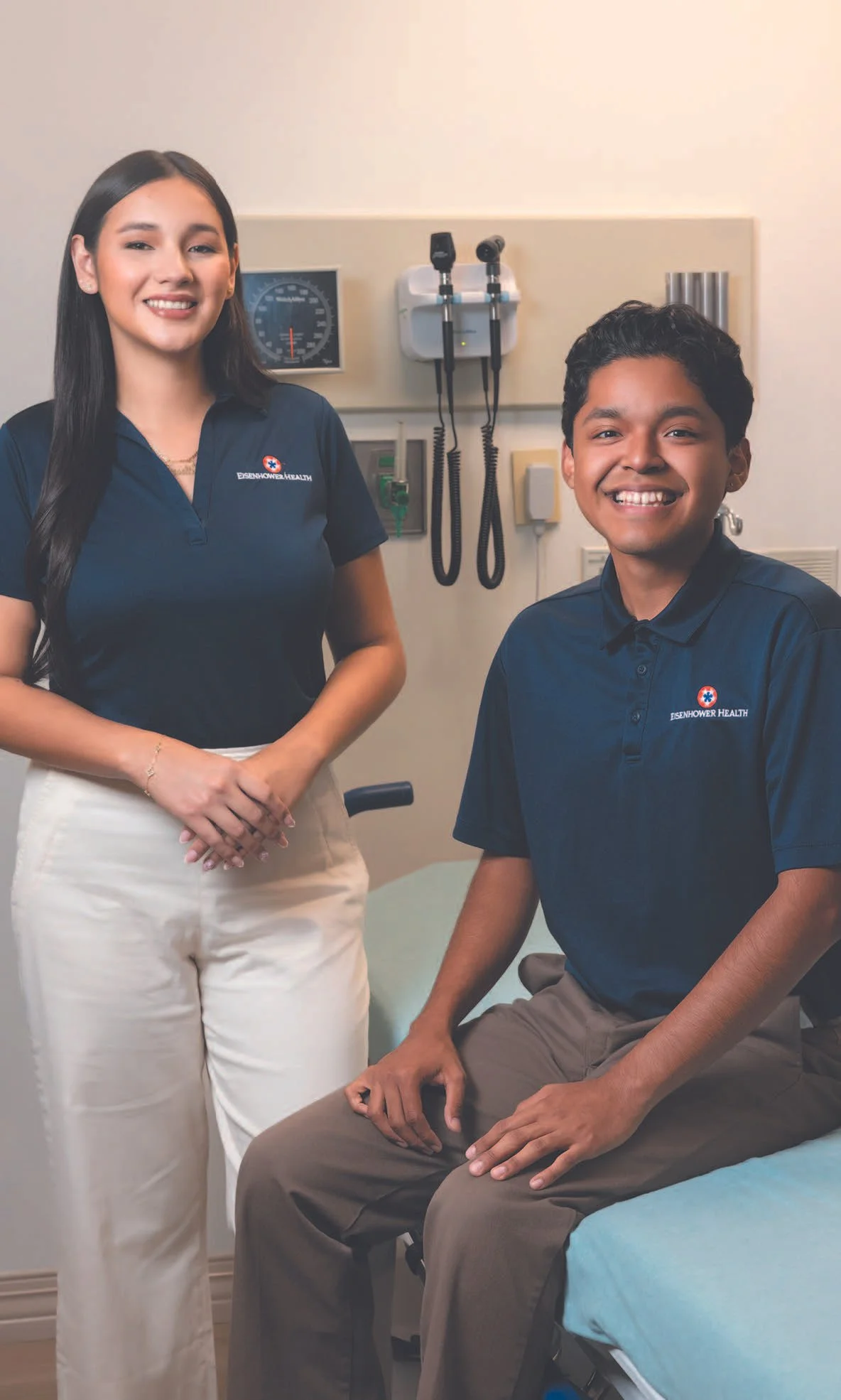
Photo of 2025-2026 EMRAP Senior Research Associate Leads — Lysdie Espinoza and Pedro Lezama-Garcia
PC: Ethan Kaminsky
The Eisenhower Medical Research Associate Program (EMRAP) is the first program of its kind in the Coachella Valley, designed to provide premedical students and undergraduate students with meaningful clinical exposure and research opportunities - essential components for competitive admission to medical school and other health professions.
EMRAP is a collaborative initiative between Eisenhower Health and the University of California, Riverside School of Medicine, serving as a vital resource for students aspiring to careers in healthcare. The program not only equips participants with meaningful clinical and research experience but also advances efforts to address healthcare needs in the Coachella Valley.
“It (EMRAP) reminded me why I want to pursue medicine and showed me that research and clinical care don’t have to exist in separate worlds — they can inform and strengthen each other.“
- EMRAP Research Associate (2024-2025 Cohort)
EMRAP was established in July 2024 by Dr. Victor Cisneros, MD, MPH, and is co-led by Dr. Jaclyn Floyd, MD, at Eisenhower Health and Dr. Ann Cheney, PhD, at the University of California, Riverside School of Medicine. The program uniquely bridges clinical exposure, academic research, and community-engaged learning.
This is an academic-year clinical research program that provides students with a unique opportunity to collaborate directly with faculty and residents at Eisenhower Medical Center. Participants receive comprehensive, structured instruction in the fundamentals of clinical research and quality improvement; engage in guided readings, lectures, and discussions; and actively contribute to ongoing clinical studies, scholarly projects, and standard-of-care quality assurance initiatives. Students participate in weekly 8-hour clinical shifts at Eisenhower Health, gaining exposure in study workflows, patient interactions, and clinical operations.
Faculty provide ongoing mentorship, professional development guidance, and support for the medical school application process. Upon successful completion of the program and adherence to program policies, students may request a letter of recommendation from the program. A financial stipend is available per academic year, recognizing students’ participation in the program.
ABOUT EMRAP
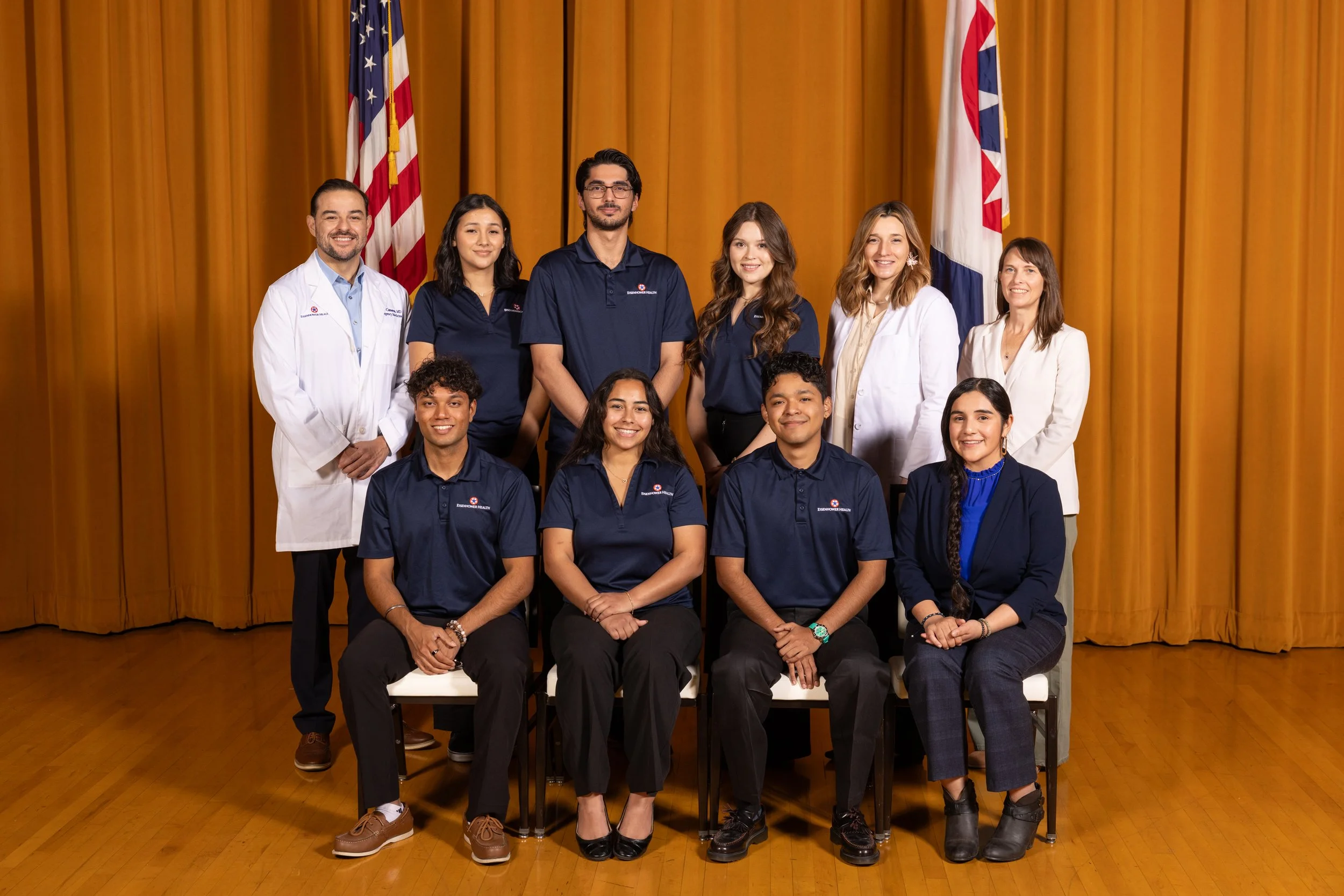
Photo of the EMRAP 2025-2026 Cohort, Co-Directors and Eisenhower Program Coordinator.

Student Publications
Photo of 2025-2026 EMRAP Senior Research Associate Leads — Lysdie Espinoza and Pedro Lezama-Garcia
PC: Ethan Kaminsky
Spontaneous Rupture of an Hepatic Artery Aneurysm: A Case Report, Against the Odds
Espinoza, Lysdie (2024-2026); Cruz, Manuel (2024-2025)
Hladik, A., Zorgrabyan, V., Espinoza, L., & Cruz, M. (2025). Spontaneous Rupture of an Hepatic Artery Aneurysm: A Case Report, Against the Odds . Clinical Practice and Cases in Emergency Medicine, 9(4). http://dx.doi.org/10.5811/cpcem.42509 Retrieved from https://escholarship.org/uc/item/9x15h83v
Superficial Perivascular Dermatitis With Eosinophils: A Diagnostic Challenge in a Patient With Autoimmune Disease
Pedro Lezama-Garcia (2024-2026)
Formaker P, Lezama-Garcia P, Lim A, Zareh-Mendez A, Awad F. Superficial Perivascular Dermatitis With Eosinophils: A Diagnostic Challenge in a Patient With Autoimmune Disease. J Investig Med High Impact Case Rep. 2025 Jan-Dec;13:23247096251385360. doi: 10.1177/23247096251385360. Epub 2025 Oct 17. PMID: 41108087; PMCID: PMC12541189.
Rare Survival After 200 Bee Stings and Severe Anaphylaxis in an Urban Environment: A Case Report
Adamari Macias Cardona (2024-2025 cohort)
MD, Gihwan & MD, Jungje & Cardona, Adamari & Diaz, MD & Chaddha, Krishan & DO, Heesun. (2025). Rare Survival After 200 Bee Stings and Severe Anaphylaxis in an Urban Environment: A Case Report. Journal of Case Reports and Reviews in Medicine. 1. 1-3. 10.64978/jcrrm-0102.
This IEHP-funded community health talk series offers accessible, practical education on topics like hydration, influenza, diabetic ketoacidosis, triglycerides, and croup—helping community members understand these conditions, recognize warning signs, and learn prevention strategies. It brings clear, culturally responsive information to vulnerable groups in the Coachella Valley, including children, older adults, people with chronic conditions, farmworkers, and immigrant Latinx communities.
For EMRAP research associates, the talks are a chance to practice communicating medical information clearly and compassionately, engage with real community health needs, and build skills in public health education. The series is collaborative and community-centered by design, bringing students, healthcare professionals, and promotoras together to translate clinical knowledge into accessible information, build trust between communities and providers, and support better health outcomes.
IEHP Public Health Talk Series
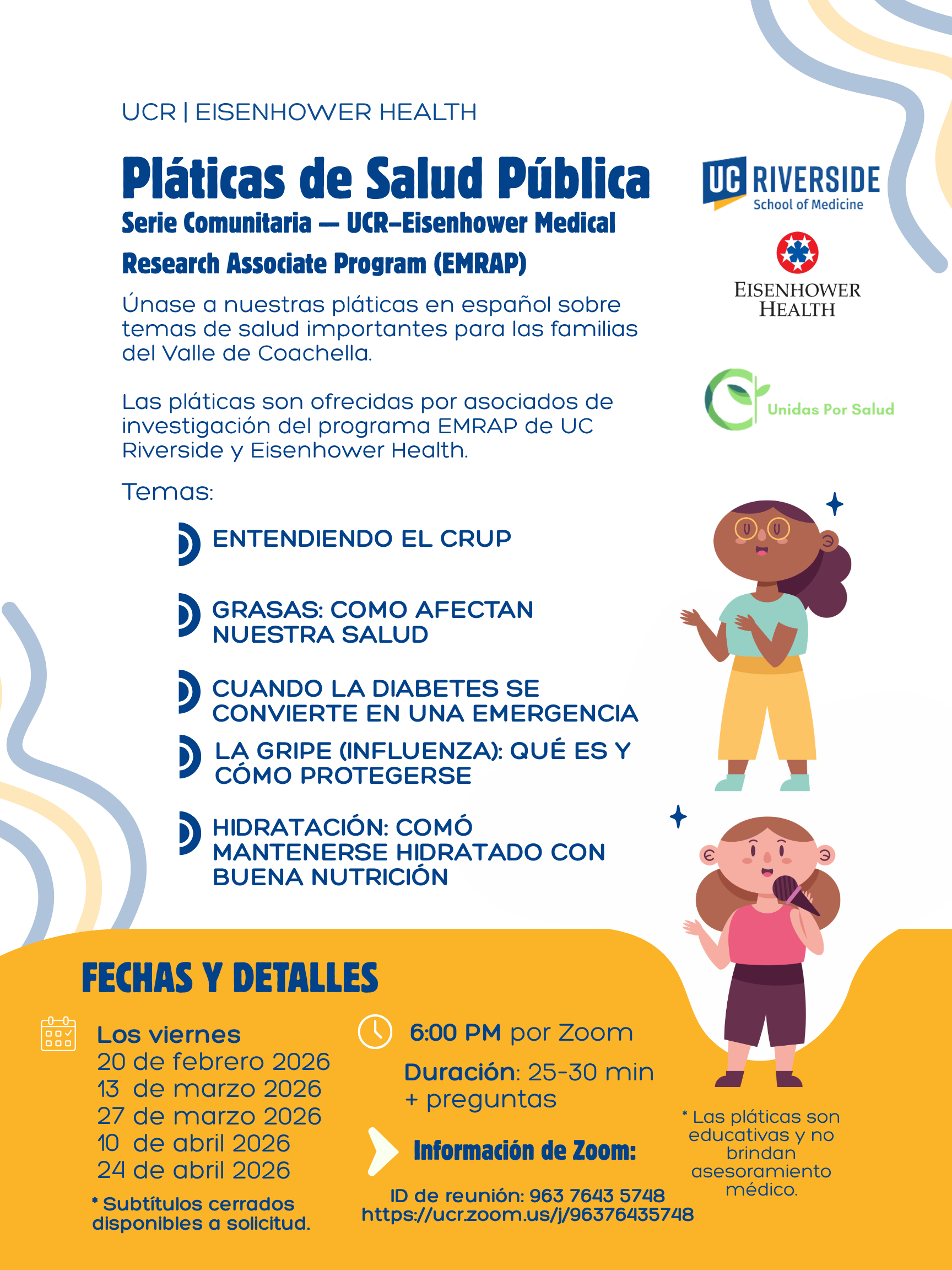
Public Health Talks 2025-2026
Understanding Croup
This talk explains what croup is, describing it as a common respiratory illness in young children that causes airway inflammation, leading to a distinctive “barking” cough, noisy breathing, and possible breathing difficulty. It emphasizes how the infection affects the airway, making it harder for air to pass and sometimes leading to serious symptoms like rapid breathing or low oxygen levels. The speakers also highlight prevention strategies such as hygiene, avoiding sick contacts, and seeking medical care early, while noting that environmental factors like air pollution can worsen respiratory health in the community.
Presented by: Promotora Mary Bautista and EMRAP Research Associates - Pedro Lezama-Garcia and Adalia Benard
Invited Eisenhower Physician: Dr. Victor Cisneros
Fats: How they affect our health
The talk explains triglycerides as a type of fat in the blood that the body uses for energy, but when levels become too high they can lead to serious health problems such as atherosclerosis, heart disease, and pancreatitis. It emphasizes that high triglycerides are closely linked to conditions like obesity and diabetes, which are especially prevalent in Latino communities due to factors such as diet, limited access to healthcare, language barriers, and socioeconomic challenges. The presenters highlight that this condition is preventable through healthy eating, regular exercise, reduced alcohol intake, routine medical checkups, and community-based education and support.
Presented by: Promotora Yesenia Pozar and and EMRAP Research Associates -
Siddharth Shanbag and Karen Pachacama
Invited Eisenhower Physician: Dr. Nelson Escudero.
When Diabetes Becomes an Emergency
This talk explains diabetic ketoacidosis (DKA) as a dangerous complication of diabetes that occurs when there is not enough insulin, causing blood sugar to rise and the body to break down fat, producing harmful acids called ketones. This leads to dehydration and symptoms such as frequent urination, extreme thirst, rapid breathing, fruity breath, nausea, and confusion, and it can become life-threatening if not treated quickly. The presenters emphasize that DKA can often be prevented through proper diabetes management, early recognition of symptoms, access to insulin, and improved education and healthcare resources in affected communities.
Presented by: Promotora Nancy Del Castillo and and EMRAP Research Associates -
Kushneet Dhami and Ana Gonzalez
Invited Eisenhower Physician: Dr. Nelson Escudero
The Flu (Influenza): What it is and how to protect yourself
This talk introduces a community health talk about influenza, focusing on why it matters and how it can be prevented, with participation from healthcare professionals, students, and community promotors. It explains what the flu is, how it spreads, its symptoms, and who is most at risk, emphasizing that it can lead to serious complications and even death. The speakers also highlight the importance of vaccination and prevention strategies, especially in vulnerable communities like Latinos in the Coachella Valley.
Presented by: Promotora Solangel Cruz and and EMRAP Research Associates -
Samantha Arenes and Lysdie Espinoza
Invited Eisenhower Physician: Dr. Jaclyn Floyd.
Hydration: How to stay hydrated with good nutrition
This talk focuses on hydration and explains why maintaining proper fluid and electrolyte balance is essential for the human body to function correctly. It describes how water makes up about 60% of the body and highlights key minerals like potassium, sodium, and magnesium that support muscle function, heart rhythm, and overall health. The speakers also discuss dehydration risks, especially in vulnerable groups such as children, older adults, people with diabetes, and outdoor workers, and emphasize prevention through drinking water regularly, eating hydrating foods, and improving access to water and health education in the community.
Presented by: Promotora Conchita Pozar and and EMRAP Research Associates -
Ruby Perez and Karen Pachama
Invited Eisenhower Physician: Dr. Jared Sharza
Program Reports
Program Summary Report 2024-2025
The inaugural 2024–2025 UCR-EMRAP Summary Report captures participant feedback, program highlights, and 14 research projects completed across five clinical specialties during the program's first year.
Highlight: EMRAP - Firsthand Experience Prepares Students for Medical School
Healthy Living magazine (Fall 2025) features EMRAP in its second year, profiling Co-Director Dr. Victor Cisneros and returning Research Associates Lysdie Espinoza and Pedro Lezama-Garcia, with five of seven inaugural participants now starting medical school.
Applications
EMRAP welcomes applications from premedical students from the Coachella Valley and Inland Southern California, including undergraduate and postbaccalaureate scholars, who are interested in participating in an academic medicine research program and gaining real-world clinical research experience.
Applications open in December; the link to apply will be provided here when the next recruitment cycle begins.
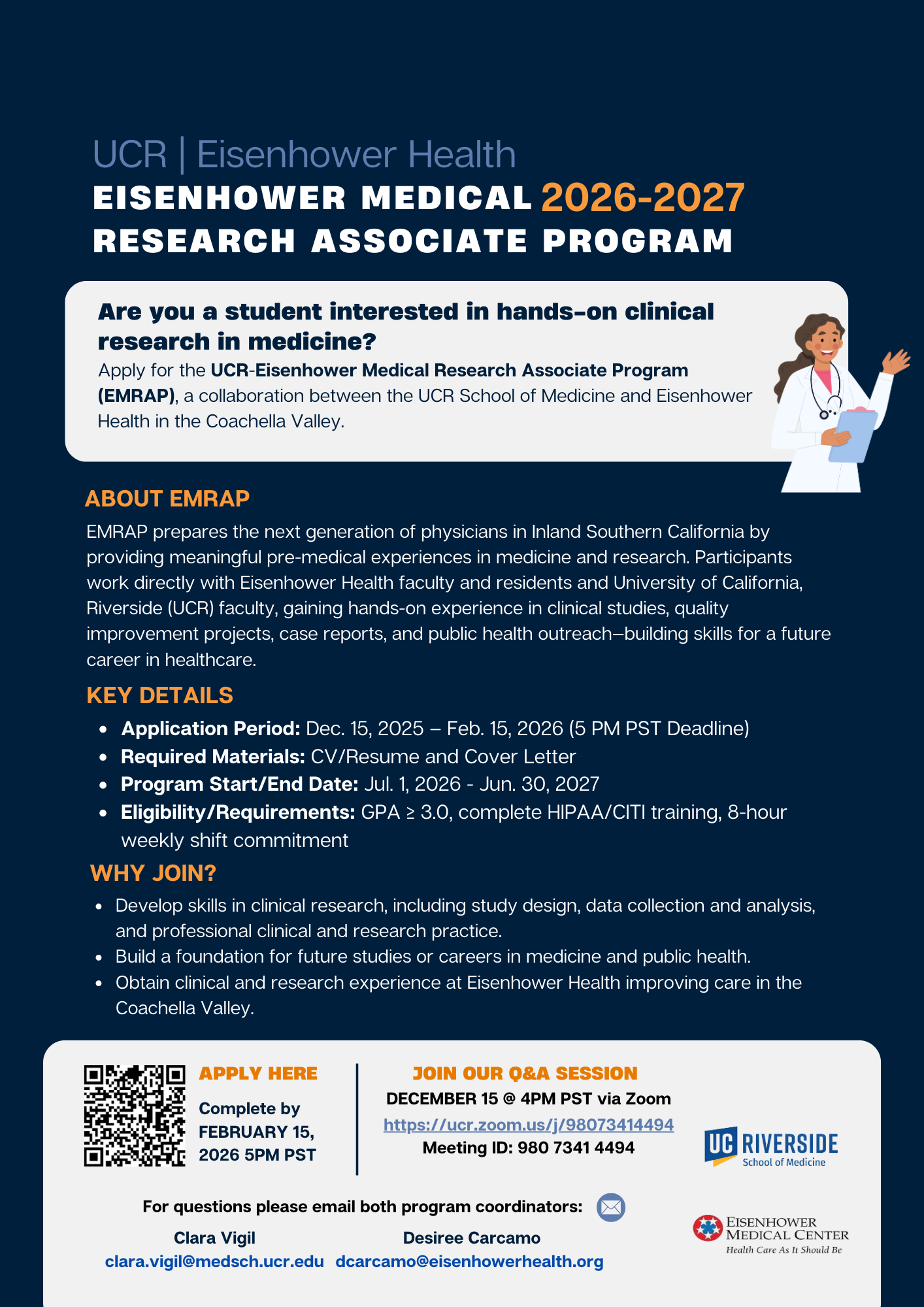
Flyer from the 2026-2027 application cycle